

How Long Does Cocaine Stay In Your System For A Roadside Test Done by UK Police?

Roadside drug testing has become a routine part of UK policing, and cocaine is one of only two drugs that officers can screen for at the kerbside.
Whether you are an employer managing driver risk, a fleet operator writing a drug and alcohol policy, or simply trying to understand how the law works, one question comes up more than any other: how long does cocaine stay in your system for a roadside test?
The honest answer is that it depends on the sample being tested, the amount taken, how often it is used, and the individual's metabolism. It also depends on which substance is being measured, because the roadside swab and the blood test that follows it look for two completely different things.
This guide explains how UK roadside drug testing works, what the police device actually detects, how long cocaine and its metabolite remain detectable, and what the legal limits are.
Important: Never Drive After Taking Drugs
Nothing in this article should be used to work out when it might be "safe" or legal to drive after taking cocaine.
Detection times vary enormously between individuals, and the metabolite the police measure in blood remains present long after the effects have worn off and long after you feel normal. There is no reliable way to calculate when you are below the legal limit. If you have taken cocaine, do not drive, and arrange alternative transport instead.
How UK roadside drug testing works

Police in England, Wales and Scotland can require a driver to provide a preliminary drug test at the roadside if they suspect drug use, if the driver has committed a moving traffic offence, or if they have been involved in a collision. Officers do not need proof of impairment to request one, reasonable suspicion is enough.
The roadside test itself is an oral fluid screening device, often referred to in the press as a "drugalyser". The driver runs a collection pad along the tongue, the sample is released onto a test strip, and a result appears within a few minutes. Officers may take more than one sample if the first is inconclusive.
A roadside screen is exactly that, a screen. It is not evidence of an offence in itself. A non-negative result leads to arrest and an evidential blood sample being taken at the police station, which is then analysed by an accredited laboratory. Our companion article Can Police Drug Test? covers police testing powers in more detail.
Refusing to provide a sample without a reasonable excuse is a separate offence, and is treated as seriously as failing the test.
What does the roadside drug test actually detect?
UK roadside devices are type approved by the Home Office and currently screen for just two drugs: cannabis (THC) and cocaine. If officers suspect other substances have been used, they can carry out a field impairment assessment and arrest the driver for further testing at the station instead.
The important technical detail is this: the roadside swab detects cocaine itself in saliva, the parent drug. The evidential blood test taken later at the police station measures both cocaine and benzoylecgonine, the inactive metabolite produced as the liver breaks cocaine down.
That distinction matters, because benzoylecgonine stays in the body far longer than cocaine does. It is entirely possible to produce a negative roadside saliva screen and still be over the specified blood limit at the station.
How long does cocaine stay in saliva?

Cocaine is generally detectable in oral fluid for approximately 24 hours after use, extending to around 48 hours in some individuals, particularly after heavy or repeated use.
Saliva has the shortest detection window of any common sample type, which is precisely why it was chosen for roadside use. Oral fluid reflects recent consumption rather than historic use, it is collected under direct observation, and it is very difficult to tamper with.
Traces of cocaine also remain in the mouth for a short period after nasal or oral use, which can produce a strong early result. For a fuller breakdown, see our detailed guide How Long Does Cocaine Stay In Saliva? and our Saliva Drug Detections page.
How long does cocaine stay in blood?
Cocaine is metabolised very quickly. The parent drug is typically cleared from the bloodstream within a few hours of use, often around four to six hours.
Benzoylecgonine is a different matter. Because it is produced steadily as the liver processes cocaine and is eliminated far more slowly, it commonly remains detectable in blood for 24 to 48 hours, and can persist for several days in frequent or heavy users.
This is exactly why benzoylecgonine was written into the drug driving legislation. Ministers were concerned that by the time a driver had been arrested, transported, processed and had blood drawn at the station, the cocaine itself would already have gone. The metabolite closes that gap.
UK drug driving limits for cocaine
Under section 5A of the Road Traffic Act 1988 it is an offence to drive, attempt to drive, or be in charge of a motor vehicle with a specified controlled drug in your body above the specified limit. The prosecution does not have to prove that your driving was impaired, only that you were over the limit.
| Substance measured | Specified limit in blood |
|---|---|
| Cocaine | 10 micrograms per litre (µg/L) |
| Benzoylecgonine (cocaine metabolite) | 50 micrograms per litre (µg/L) |
These limits were set deliberately low, at levels intended to rule out any realistic claim of accidental or passive exposure. They came into force in England and Wales on 2 March 2015 under the Drug Driving (Specified Limits) (England and Wales) Regulations 2014, and equivalent limits took effect in Scotland on 21 October 2019 under the Drug Driving (Specified Limits) (Scotland) Regulations 2019. Drivers in Northern Ireland should check the arrangements that currently apply locally, as road traffic law there is devolved.
Cocaine detection windows by test type
Detection times depend heavily on the sample used and what is being measured.
| Test type | What is detected | Typical detection window |
|---|---|---|
| Saliva (roadside screen) | Cocaine | Around 24 hours, up to 48 hours |
| Blood (evidential, police station) | Cocaine and benzoylecgonine | Cocaine a few hours, benzoylecgonine 24-48 hours or longer |
| Urine | Benzoylecgonine | 2-5 days, longer with heavy use or ultra sensitive tests |
| Hair | Cocaine and metabolites | Up to 90 days |
These figures are estimates and can vary considerably from person to person. They should never be treated as a countdown.
What affects how long cocaine stays in your system?
Several factors influence how quickly cocaine and benzoylecgonine are cleared:
Amount used
Larger doses take longer to clear and produce higher peak concentrations in blood and oral fluid.
Frequency of use
Regular or binge use allows benzoylecgonine to accumulate, which can extend detection well beyond the windows quoted above.
Route of administration
Snorting, smoking and injecting produce different absorption profiles, which affects both peak levels and how quickly the drug is eliminated.
Metabolism and liver function
Cocaine is broken down by liver enzymes and blood esterases. Anything that impairs liver function slows clearance.
Body composition and hydration
Body mass, body water and hydration status all influence concentration and elimination rates, particularly for urine testing.
Alcohol taken alongside cocaine
When cocaine and alcohol are used together the body forms cocaethylene, an additional active metabolite with a longer half life than cocaine itself. This can extend both the effects and the detection window.
Test sensitivity
Cut-off levels vary between devices. An ultra sensitive drug test will detect lower concentrations, and therefore detect use for longer, than a standard panel.
What happens if you fail a roadside drug test?
A non-negative roadside screen leads to arrest on suspicion of drug driving. At the police station an evidential blood sample is taken by a healthcare professional and sent to a laboratory for confirmatory analysis, usually by mass spectrometry.
Charges follow only if the laboratory result exceeds the specified limit. The driver is normally offered a portion of the sample so that it can be independently analysed if they wish to challenge the result.
The same principle applies to workplace and home testing. Rapid screening tests are screening tools, and any non-negative result that could affect someone's employment or legal position should be confirmed by an accredited laboratory before action is taken.
Penalties for drug driving in the UK
A drug driving conviction carries serious consequences:
- A minimum 12 month driving disqualification
- An unlimited fine
- Up to 6 months in prison
- A criminal record
- An endorsement that stays on your driving record for 11 years
The ban rises to at least three years for a repeat offence within ten years. Convictions also affect insurance premiums, employment prospects, and travel to countries such as the USA. Causing death by careless driving while over a specified drug limit carries a far heavier sentence.
Can you still fail a roadside test the morning after?
Yes. This is one of the most common misunderstandings about cocaine and driving.
The stimulant effects of cocaine wear off within a few hours, so a driver may feel completely normal the following morning. Cocaine may well have cleared from oral fluid by then, meaning the roadside swab could come back negative. But benzoylecgonine can still be sitting in the bloodstream well above the 50 µg/L limit, and if a driver is arrested for any other reason and blood is taken, that is what the laboratory will find.
Feeling sober is not the same as being under the limit.
Can you speed up how quickly cocaine leaves your system?
No. Coffee, cold showers, exercise, energy drinks and drinking large volumes of water do not meaningfully accelerate the breakdown or elimination of cocaine or benzoylecgonine.
Excessive water intake may dilute a urine sample enough to affect a screening result, but dilution is routinely checked for by validity testing and by laboratories, and it does nothing whatsoever to a blood sample. Only time allows the body to clear the drug.
Cocaine testing for employers and fleet operators
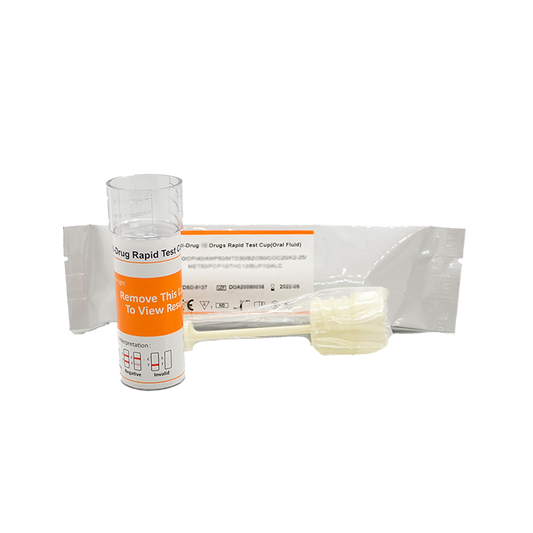
Organisations that put people behind the wheel carry a clear duty of care, and cocaine is consistently one of the most frequently detected drugs in UK workplace screening programmes. Saliva testing is particularly well suited to driver and fleet settings because it targets recent use rather than historic use, and because collection can be observed without the need for dedicated facilities.
Typical testing scenarios include:
- Pre-employment screening for driving roles
- Random testing under a published drug and alcohol policy
- Post-incident and post-collision testing
- For-cause or reasonable suspicion testing
- Return to work testing following rehabilitation
Our driver focused saliva kits screen for cocaine alongside a range of other substances and, in several variants, alcohol from the same sample. Popular options include the Saliva Multi Drug Midstream (ALLTEST) Driver 7 panel, the Saliva Multi Drug Cube (UKDrugTesting) Driver 11 panel with alcohol, and the 12 panel Saliva Multi Drug Barrel (UKDrugTesting) Driver. You can see the full range in our Saliva Drug Tests collection, and read more on our Workplace Drug Testing page.
Can you test yourself for cocaine at home?
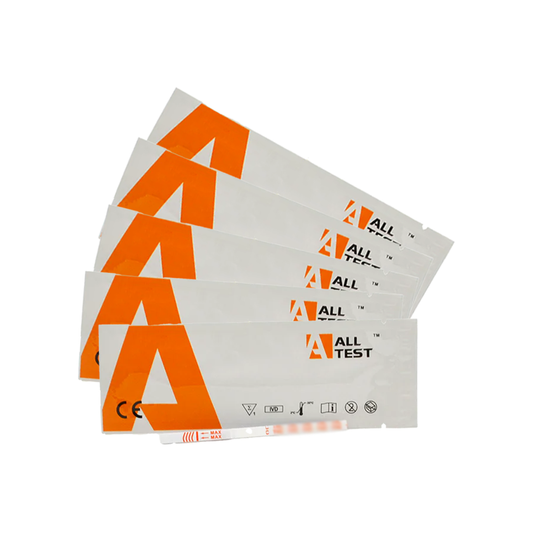
Home cocaine testing is widely used by families, carers, treatment services and people monitoring their own recovery. Our Cocaine Urine Drug Test Strips are the simplest and most cost effective option, with an ultra sensitive 100ng version available where a lower cut-off is needed, and a single panel Cocaine Saliva Drug Test for recent use.
What a home test cannot do is tell you whether you are legal to drive. Home kits use different cut-off levels to police devices, they screen oral fluid or urine rather than blood, and crucially they cannot measure the benzoylecgonine concentration in your bloodstream, which is the figure the court actually relies on. A negative home screen is not a clearance to get behind the wheel.
Browse the full range in our Cocaine Drug Tests collection, or read the background information on our Cocaine Drug Testing page.
Laboratory confirmation testing

Every rapid test, whether saliva or urine, is a screening device. Where a result may affect employment, a disciplinary process, family court proceedings or any other formal decision, it should be confirmed by an accredited laboratory using GC-MS or LC-MS/MS.
Our Urine Lab Confirmation Pack provides a full chain of custody service through a UKAS accredited UK laboratory, and the wider range is available in our Lab Drug Tests collection.
Choosing the right cocaine drug test
When selecting a test, consider:
- Whether you need to detect recent use (saliva) or use over several days (urine)
- Whether cocaine (COC) is listed on the panel, and at what cut-off level
- Whether you also need alcohol screening from the same sample
- Whether a non-negative result will need laboratory confirmation
- Whether the test is for home, workplace, clinical or driver screening use
If you need to test an unknown powder or a surface rather than a person, that requires a different product entirely. Our Residue Drug Tests collection covers powders, banknotes, packaging and surfaces.
Frequently asked questions
How long does cocaine stay in your saliva for a roadside test?
Typically around 24 hours, and up to about 48 hours in some individuals. Heavier or more frequent use extends the window.
Does the roadside test detect cocaine or benzoylecgonine?
The roadside oral fluid device screens for cocaine itself. The evidential blood test taken at the police station measures both cocaine and benzoylecgonine.
What drugs can the police test for at the roadside?
Current Home Office type approved roadside devices screen for cannabis and cocaine only. Other drugs are dealt with through a field impairment assessment and testing at the police station.
Can I fail a drug driving test the day after using cocaine?
Yes. Benzoylecgonine can remain in blood above the specified limit for 24 to 48 hours, and longer in frequent users, even once you feel completely normal and the saliva screen is negative.
Is there a legal limit for cocaine, or is it zero tolerance?
The limits are set at 10 µg/L for cocaine and 50 µg/L for benzoylecgonine in blood. These are described as zero tolerance limits because they are set low enough to exclude accidental exposure, not because any detectable trace is automatically an offence.
Can passive exposure to cocaine cause a positive result?
It is highly unlikely. The specified limits were deliberately set at levels that rule out realistic claims of accidental or environmental exposure.
Does drinking water clear cocaine from your system faster?
No. Fluids do not speed up the metabolism or elimination of cocaine or benzoylecgonine, and they have no effect at all on a blood sample.
Shop cocaine drug testing kits
Whether you are screening drivers, running a workplace testing programme, or testing at home, choosing a professional quality kit matters. Our range covers rapid saliva and urine cocaine tests, multi drug panels, ultra sensitive options and laboratory confirmation, all supplied from UK stock with fast, discreet delivery and technical support from a company founded and run by UK doctors since 1998.
The information provided in this article is for general educational purposes only and is not intended to replace professional medical advice, legal advice, or guidance from the relevant authorities.
Cocaine detection times vary depending on the amount used, frequency of use, route of administration, metabolism, liver function, body composition, hydration, and the sensitivity of the test used. Any estimates in this article should not be used to decide whether you are safe or legally permitted to drive, and should not be used to predict an individual test result.
There is no reliable way to calculate when the concentration of cocaine or benzoylecgonine in your blood has fallen below the specified limit. You may be over the limit long after the effects have worn off and long after you feel normal. The safest option is simple: do not drive if you have taken cocaine or any other controlled drug. The specified limits for section 5A of the Road Traffic Act 1988 are set out in the relevant regulations. (legislation.gov.uk)
Drug Testing Kit provides information and testing products to support awareness and responsible decision-making. Our drug testing products are screening devices, and are not a substitute for professional medical advice, legal advice, evidential police testing equipment, or accredited laboratory analysis.
If you have concerns about your own or someone else's cocaine use, speak to a GP or your local drug treatment service. Confidential advice and support is available from FRANK on 0300 123 6600 or at talktofrank.com. In a medical emergency, always call 999.